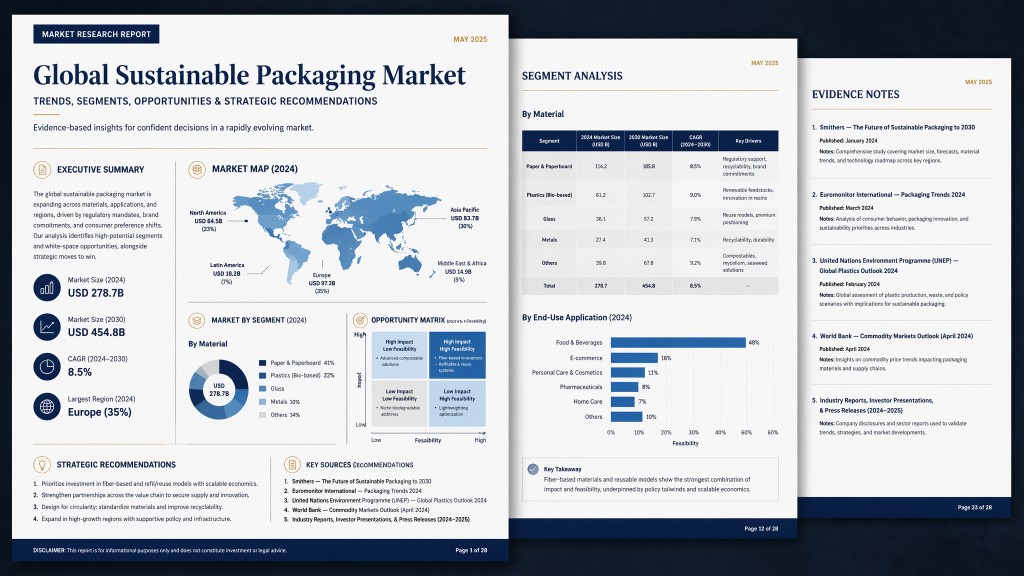
Turn Deep Research into Structured AI Reports
Tell Muse what you need to investigate. Muse can plan the research, search high-quality web sources, work from files and notes you provide, analyze evidence, and create a structured AI report you can review and refine.
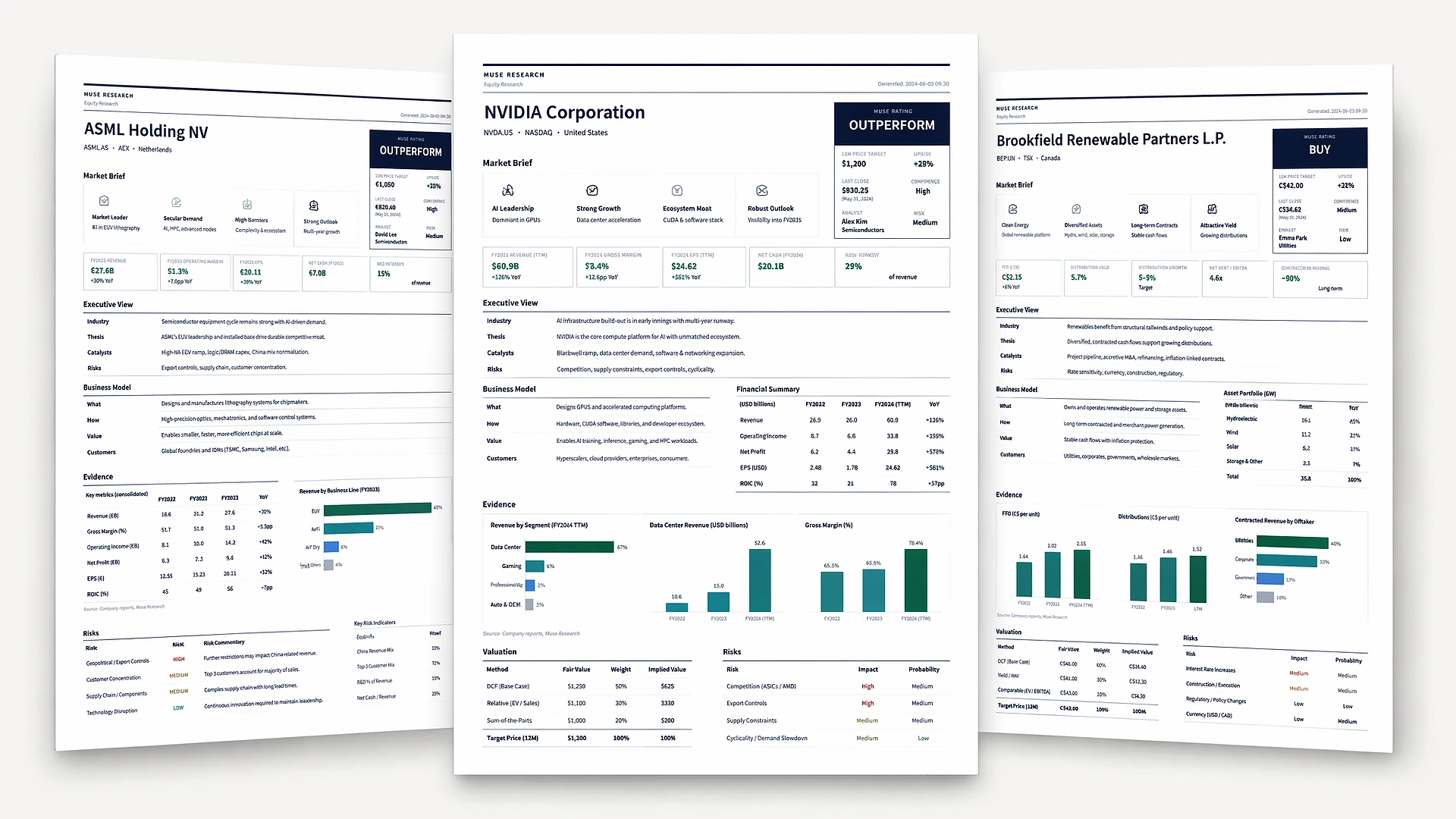
What Muse can do for deep research
Muse helps with the full deep research workflow — from scoping the question to packaging a report with sources, limitations, and next steps.
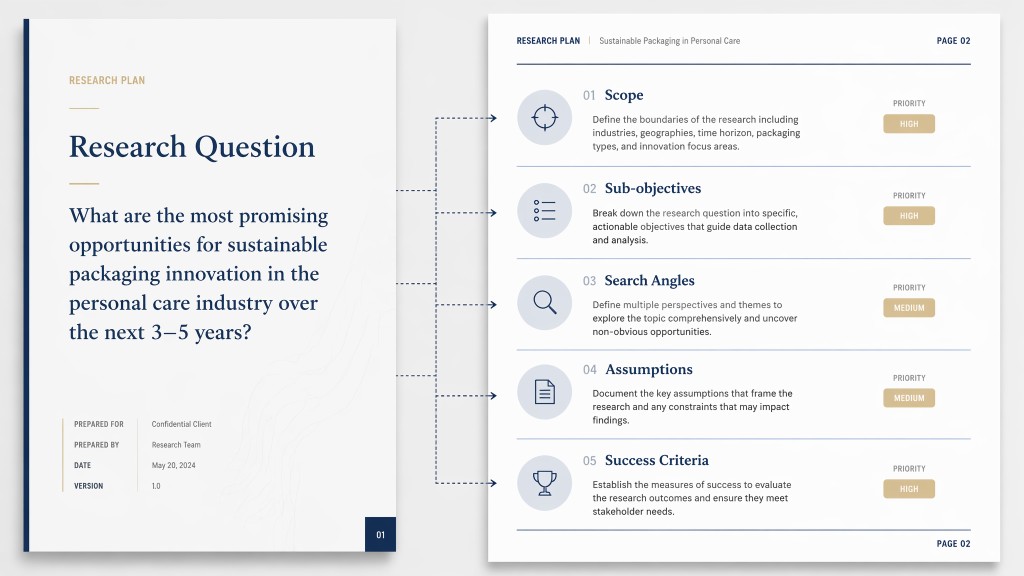
Plan complex research
Turn a broad question into a focused research plan.
Break the work into sub-objectives and search angles.
Keep scope, assumptions, and success criteria visible.
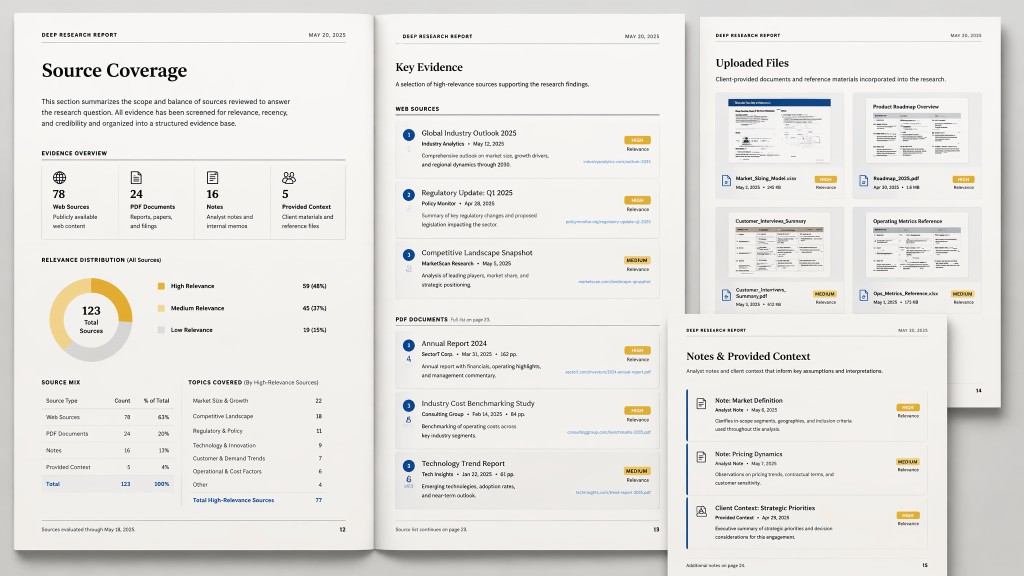
Gather sources progressively
Search public web sources and organize relevant evidence.
Work from files, notes, and context you provide.
Let early findings shape the next retrieval steps.
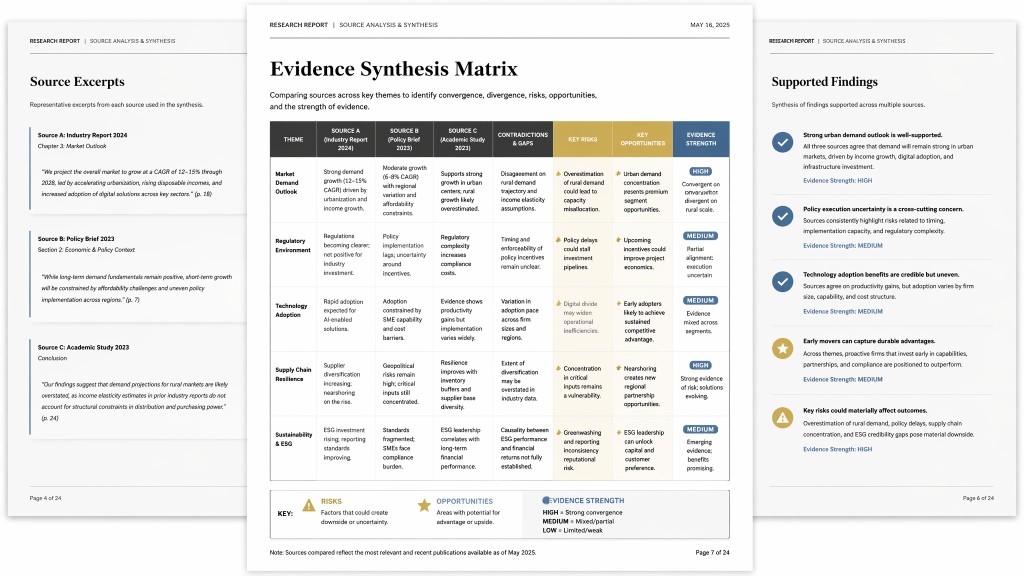
Analyze and synthesize findings
Compare sources instead of summarizing them one by one.
Extract themes, contradictions, risks, and opportunities.
Build a structured view of what the evidence supports.
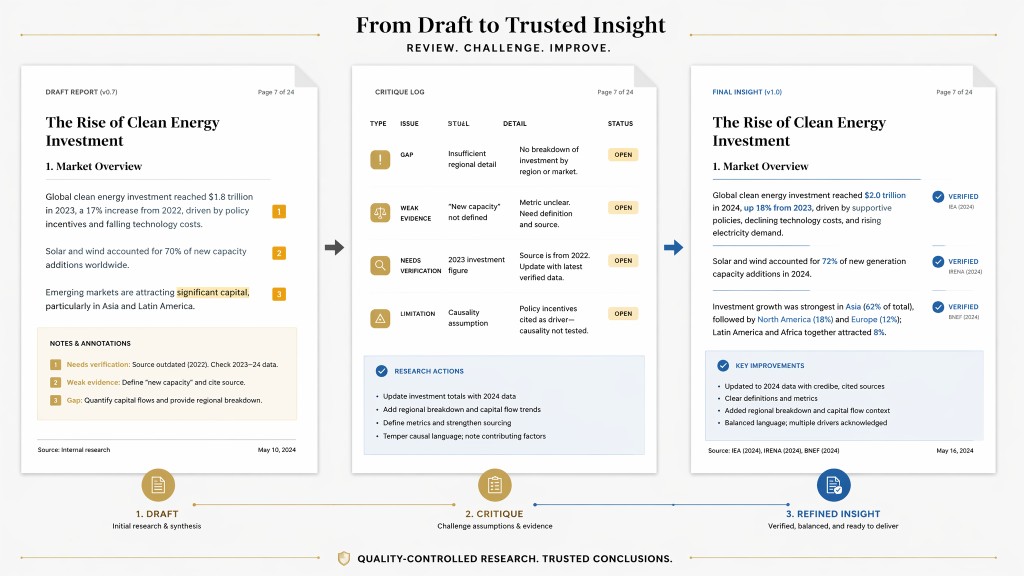
Critique and refine the report
Review gaps, weak claims, and unsupported assumptions.
Improve the answer through critique and follow-up retrieval.
Keep limitations visible before conclusions are finalized.
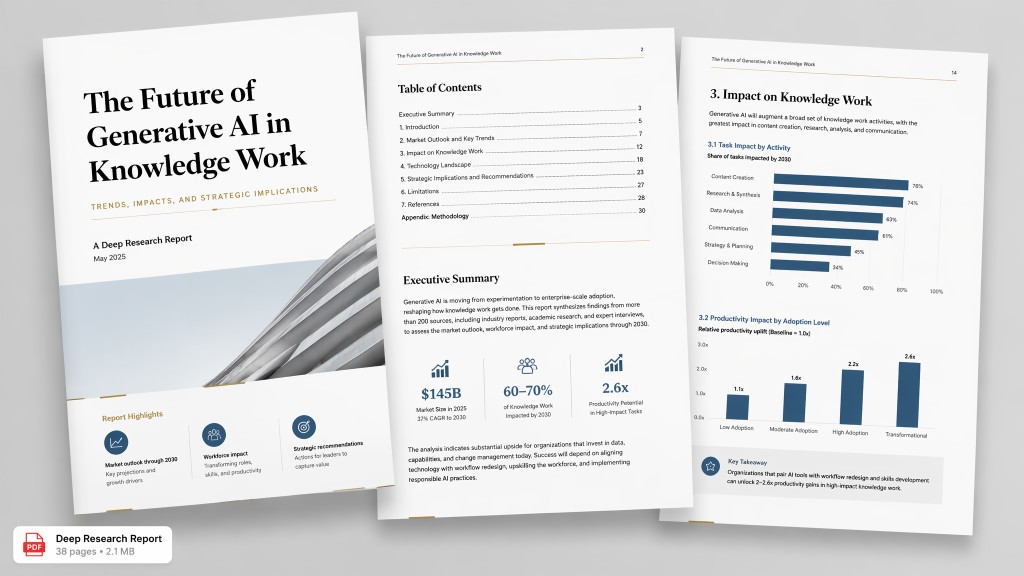
Package reports for real work
Create executive summaries, detailed analysis, and references.
Export practical Markdown or PDF-style research deliverables.
Use the report as a base for follow-up questions.
Why Muse for deep research
Muse is built for research that takes more than a quick answer. It can plan, retrieve, critique, refine, and package findings while keeping you in control of sources and important actions.
| Manual Research | Generic AI Chat | Muse | |
|---|---|---|---|
| Starting point | Open tabs, scattered notes, and manual search queries | One prompt and a generated answer | A scoped research request, source materials, and a plan |
| Retrieval | Manual source collection and copy-paste notes | Often limited to current model context or a few links | Progressive web and file-based retrieval with organized evidence |
| Analysis | User compares every source by hand | May summarize without checking gaps | Synthesizes themes, contradictions, risks, and opportunities |
| Quality control | Depends on the user's review bandwidth | May skip critique unless prompted | Uses critique and refinement steps before packaging the report |
| Output | Notes need to be rewritten into a report | Answer may not be presentation-ready | Structured reports with summary, analysis, limitations, and references |
| Control | Fully manual but slow | Fast, but important assumptions can be hidden | Muse asks before important actions and keeps you in control |
3 steps to your deep research report
Go from a rough question to a report you can review, refine, and use.
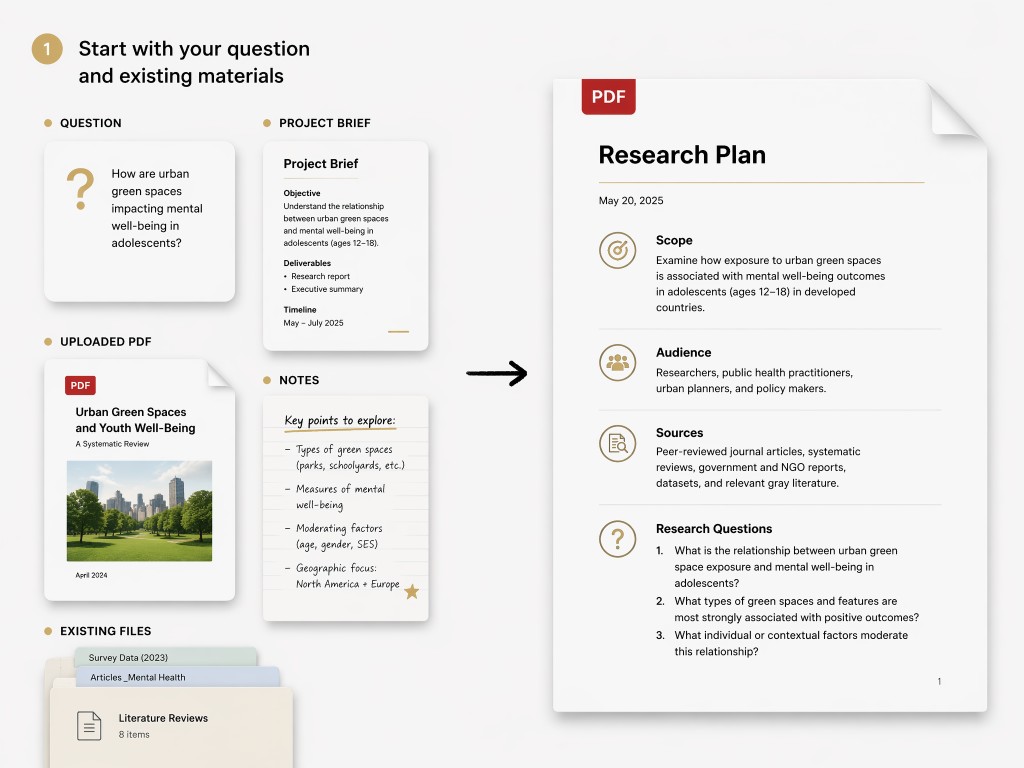
1. Tell Muse what to investigate
Describe the question, audience, sources, scope, or files you want Muse to use.
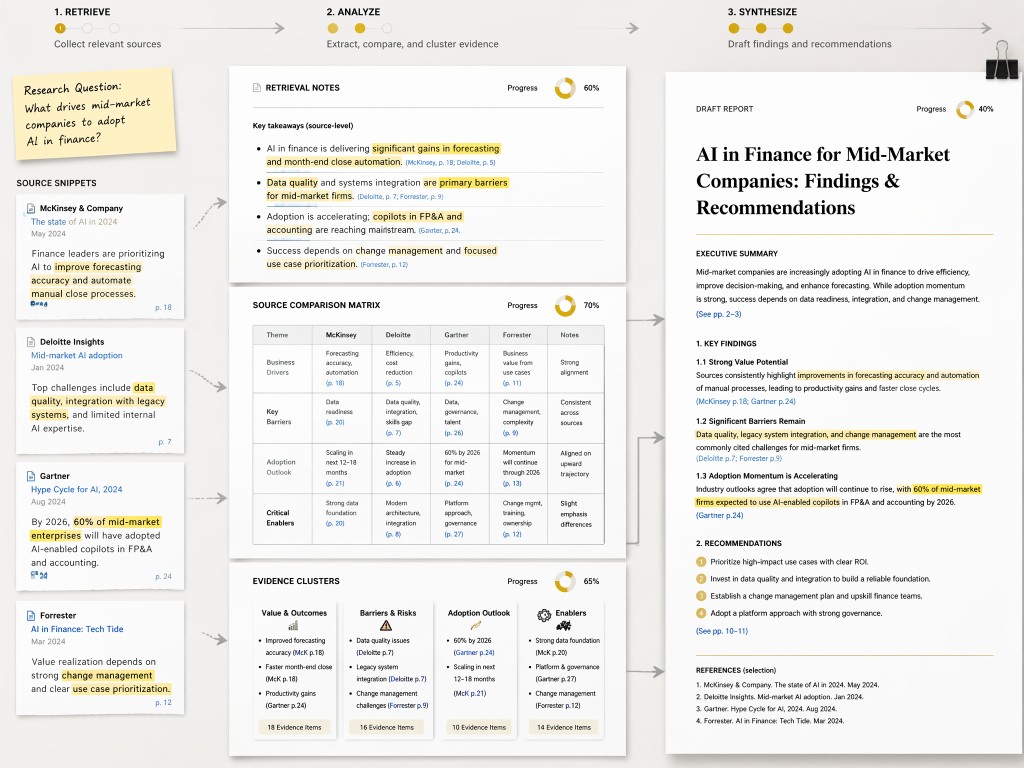
2. Muse researches and analyzes
Muse plans sub-objectives, gathers sources, compares evidence, and refines weak areas.
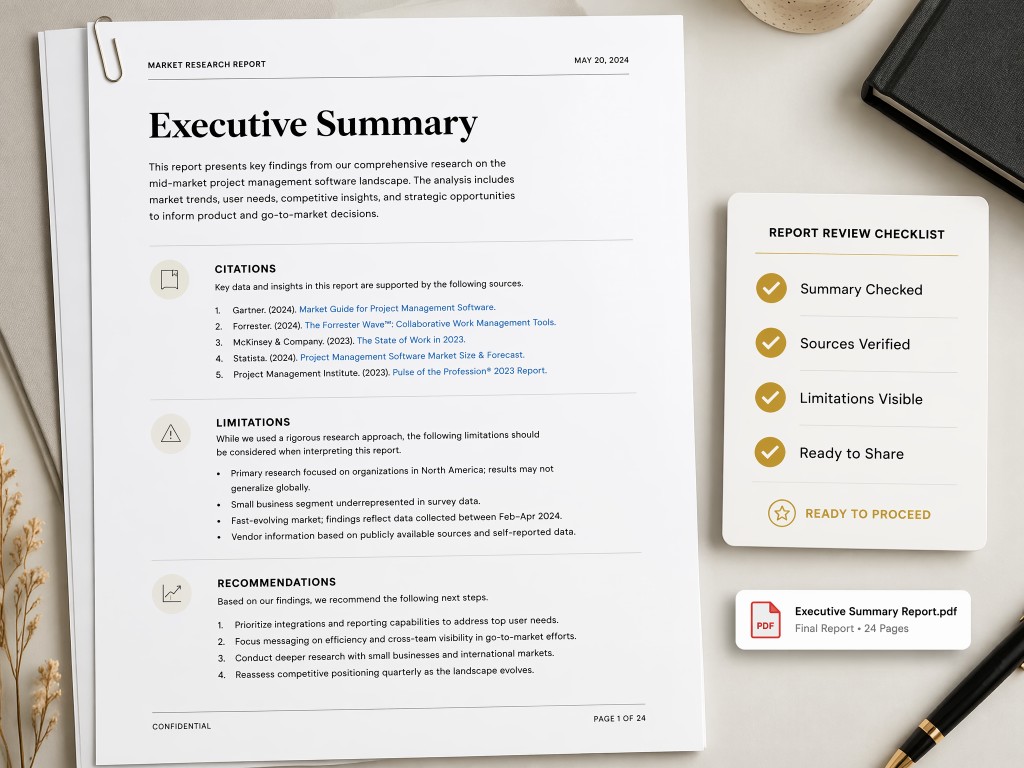
3. Review and use the report
Check the summary, citations, limitations, and recommendations before sharing or continuing.
Try these deep research prompts
Use Muse for research tasks that need sources, structure, and a clear final deliverable.
See what Muse can create
Muse can turn complex questions and source material into different report formats for product, strategy, finance, and research work.