'/%3e%3cdefs%3e%3clinearGradient%20id='paint0_linear_6609_68599'%20x1='3.18225'%20y1='15.6908'%20x2='32.433'%20y2='20.6207'%20gradientUnits='userSpaceOnUse'%3e%3cstop%20stop-color='%230048ED'/%3e%3cstop%20offset='1'%20stop-color='%230DECD7'/%3e%3c/linearGradient%3e%3c/defs%3e%3c/svg%3e)
'/%3e%3cdefs%3e%3clinearGradient%20id='paint0_linear_6609_68609'%20x1='3.18219'%20y1='15.6908'%20x2='32.4329'%20y2='20.6207'%20gradientUnits='userSpaceOnUse'%3e%3cstop%20stop-color='%236896FF'/%3e%3cstop%20offset='1'%20stop-color='%230DECD7'/%3e%3c/linearGradient%3e%3c/defs%3e%3c/svg%3e)


MuseWork: Exploring the Most Natural Way to Work with AI
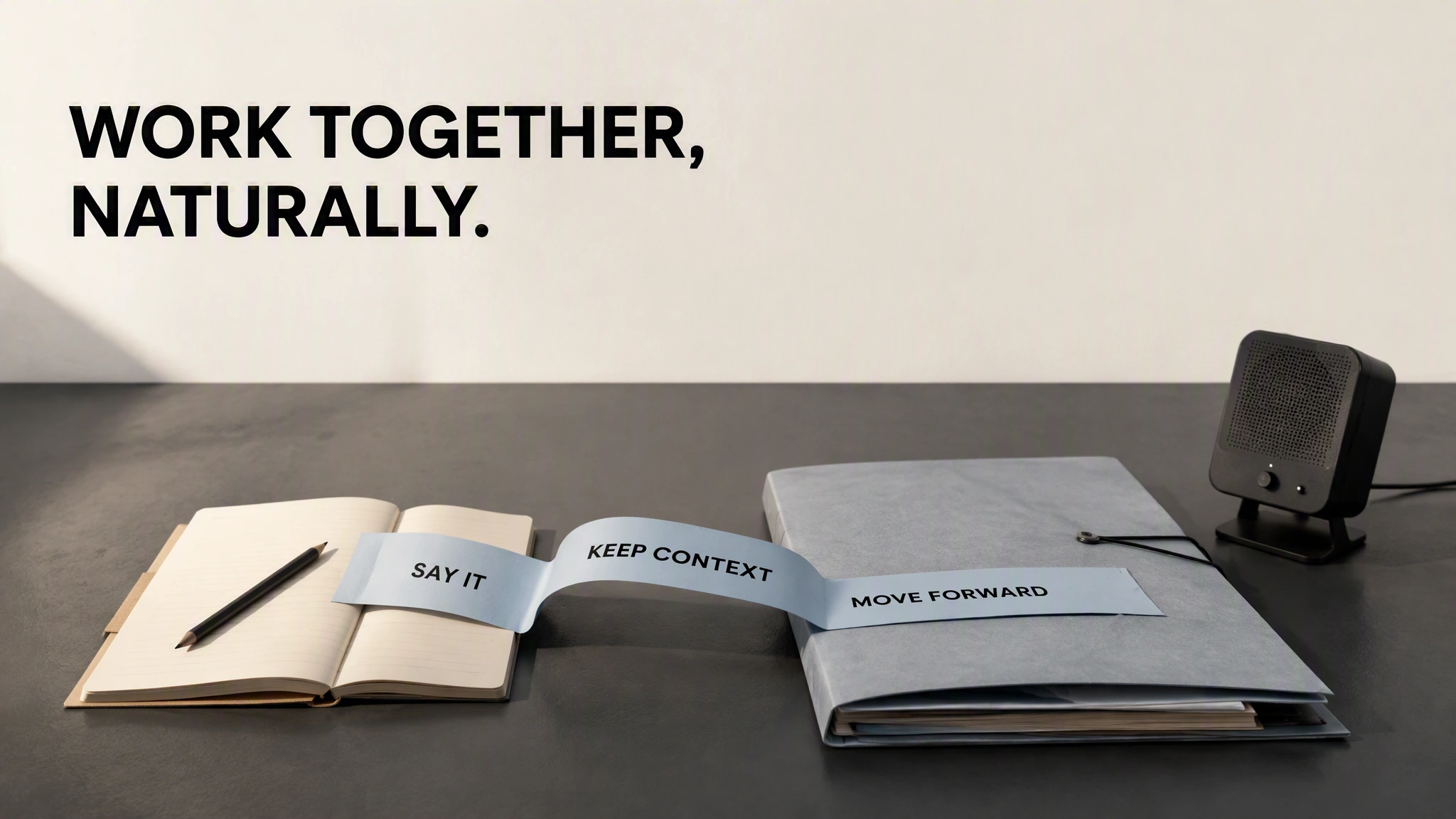
Today, more and more AI Agent products are trying to execute complex tasks on behalf of users.
They can browse the web, call tools, generate files, and complete workflows — growing more capable by the day. But many still follow a "task machine" interaction paradigm: users create a task, add context, wait for the result, then manually check, organize, and archive it.
This is certainly a step beyond simple chatbots, but it still hasn't answered a more fundamental question:
When AI truly becomes a long-term collaborator, what is the most natural way for humans and AI to work together?
This is exactly what MuseWork is exploring.
We don't believe the answer is a more complex task system, nor that users should have to learn a new set of Agent operations. The most natural way to collaborate actually already exists — in how humans work remotely:
It should feel like a real remote assistant you've never met in person.
When you have a remote colleague, assistant, or partner, you don't first think:
- Should I start a new chat?
- Should I create a new task?
- Which project does this context belong to?
- Do I need to re-explain the background?
- Where should I file this deliverable?
You just talk to them like a person:
- Let's keep pushing this forward.
- The last version wasn't right — let's try a different direction.
- Can you pull together all the related materials?
- This is hard to explain over text — let's hop on a call.
This is the starting point of MuseWork's design.
Over the past two decades, IM, email, video calls, and collaborative docs have taught users how to work with another person remotely: send a message when something comes up, go back and forth for complex topics, jump on a call when text doesn't cut it — and the other person understands context, organizes materials, and keeps things moving forward.
MuseWork should not ask users to learn a new AI workflow.
It should not require users to manually create chats, tasks, or projects just to fit the system's structure. Context management, task splitting, and file archiving — work that should be handled by the assistant — should not become the user's burden.
The "new task" in many Agent products and the "new chat" in many AI products are essentially management overhead. They appear to help users organize their work, but often just shift what the system can't automatically understand onto the user.
If you truly had a great assistant, projects shouldn't mainly be created by users — they should be proactively organized by the assistant.
It would recognize which conversations, files, deliverables, and decisions belong to the same project. It would periodically organize the Library according to real work threads. It would preserve versions, accumulate context, archive results, and automatically pick up where things left off the next time the user brings it up.
MuseWork believes the user's most natural way of expressing themselves is the best interaction model.
You don't need to write the perfect prompt, design a task structure, or manage context windows. You just need to say what you're thinking — like you would with a real human assistant.
- Just say it when something comes up.
- Hop on a call when text isn't enough.
- After the meeting, MuseWork writes up the notes.
- Once you confirm, MuseWork gets to work.
This is the direction MuseWork is exploring: Not teaching users how to command an Agent, but teaching AI how to collaborate like a remote assistant.
MuseWork's goal is not to make task execution more complex — it's to make collaboration more natural.
Great work together.