


Explain your goal, use case, and delivery requirements so MuseWork can move the task forward more accurately.
Start with what you want to accomplish
When starting a task, first describe the final outcome you need instead of providing only a broad topic.
For example, instead of saying:
Research the electric vehicle market.
Add the important constraints:
Research China's electric vehicle market, compare the positioning and target users of five leading brands, and deliver a competitive analysis report for an internal product review.
What information should you provide?
Include the details that matter for your task:
- Goal: what MuseWork should ultimately complete.
- Use case: whether the result is for a presentation, decision, publication, or internal discussion.
- Audience: who will read or use the result.
- Scope: what must be included or prioritized.
- Delivery requirements: language, length, structure, format, and deadline.
- Reference standard: tone, template, example, or visual style to follow.
- Constraints: what must not be changed or used, and what requires extra verification.
You do not need to prepare everything before starting. State the core goal first, then add materials and requirements as the task progresses.
How should you use reference files?
Upload limits vary by subscription:
- Max: no per-upload file limit.
- Pro: up to 10 files per upload.
- Free: up to 1 file per upload.
Use the “+” button at the bottom of the chat composer to add files from your device or Library.
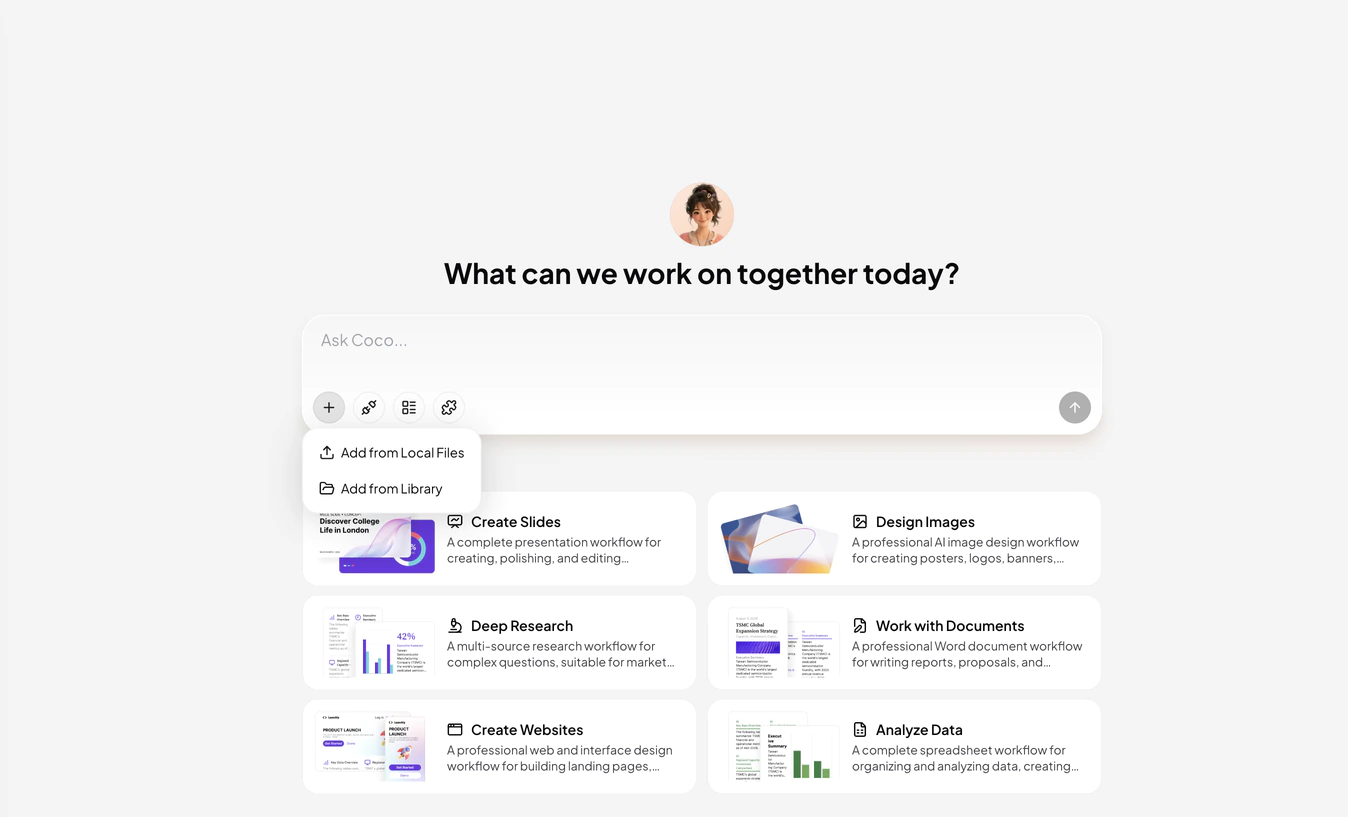
After uploading, explain how each file should be used.
Use “Product Positioning.pdf” as the factual source and “Competitor Report.docx” only as a structural reference. Do not copy its product facts.
What if MuseWork misunderstood you?
Point out the misunderstanding directly and specify the correct direction, what should change, and what should remain.
The audience is incorrect. This analysis is for university students, not early-career professionals. Keep the current report structure and only revise the user needs and examples.
A simple way to phrase a request
Use this order:
What I want to accomplish + who will use it + priorities + reference materials + delivery format
More specific information helps MuseWork reduce unnecessary confirmation and produce a result that is easier to review, revise, and use.